You’re texting someone. They reply with “FR?” or just “FR.” Now you pause. Are they serious? Are they joking? Are they agreeing or questioning you?
This is exactly why so many people search for FR meaning in text. It shows up everywhere—Instagram, Snapchat, chats, even gaming. And depending on how it’s used, it can mean different things.
The good news? It’s not complicated once you see it in context.
In this guide, you’ll learn the exact meaning of “FR,” how people actually use it in real conversations, and how to reply without feeling confused. By the end, you’ll understand it like a native texter in 2026.
What Does “FR” Mean in Text?
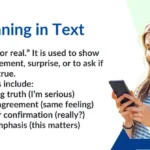
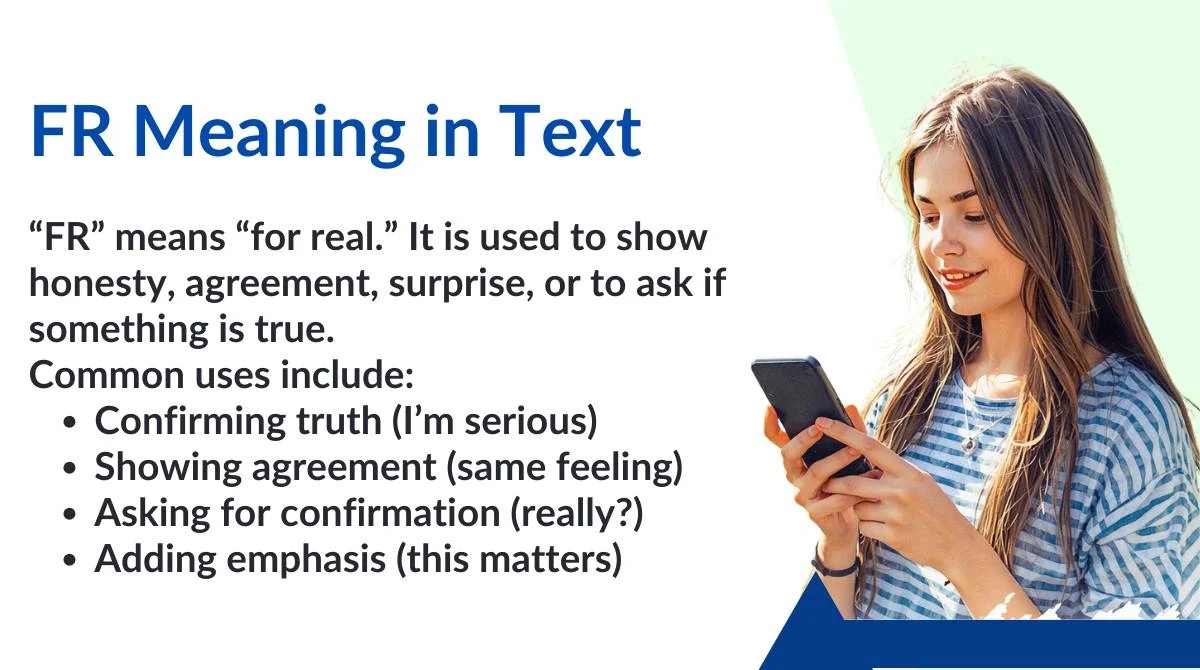
“FR” means “for real.” It is used to show honesty, agreement, surprise, or to ask if something is true.
Common uses include:
- Confirming truth (I’m serious)
- Showing agreement (same feeling)
- Asking for confirmation (really?)
- Adding emphasis (this matters)
The Most Common Meanings of “FR”
1. “For Real” (Serious or Honest)
This is the main meaning. It shows that someone is being truthful.
When it’s used:
- To stress honesty
- To show you mean what you say
Examples:
- “I’m tired FR.”
- “That movie was boring FR.”
2. “Really?” (Questioning Something)
When used with a question mark, “FR?” means “Are you serious?” or “Is that true?”
When it’s used:
- When surprised
- When unsure
Examples:
- “You got free tickets?”
- “FR?”
3. Agreement or Relatability
Sometimes “FR” shows strong agreement with what someone said.
When it’s used:
- To relate to someone
- To say “same here”
Examples:
- “This class is so long.”
- “FR.”
4. Emphasis or Emotion
It can also add emotion or intensity to a message.
When it’s used:
- To make a point stronger
- To show deep feeling
Examples:
- “You need to try this food FR.”
- “That game is hard FR.”
How “FR” Is Used in Real Conversations
Friends & Casual Texting
Among friends, “FR” is very common. It keeps chats quick and natural.
Examples:
- “You didn’t tell me that FR?”
- “I miss those days FR.”
It often replaces longer phrases like “seriously” or “I’m not joking.”
Instagram & Snapchat
On social media, “FR” is used in comments, captions, and replies.
Examples:
- Comment: “This outfit is fire FR.”
- Reply: “You went there FR?”
It adds emotion and keeps the tone casual.
Dating Apps
In dating chats, “FR” can show interest or curiosity.
Examples:
- “You like that show too? FR?”
- “You’re funny FR.”
It can make messages feel more real and less formal.
Gaming & Online Communities
Gamers use “FR” to react quickly during chats.
Examples:
- “That level is impossible FR.”
- “You won that match FR?”
It keeps communication fast during gameplay.
Work or Professional Chat
“FR” is less common here but still appears in casual work chats.
Examples:
- “We need to fix this issue FR.”
Be careful—this can sound too informal in serious settings.
Is “FR” Rude, Flirty, or Offensive?
“FR” itself is not rude. But tone depends on context.
When It Feels Positive
- Showing agreement
- Being honest
- Expressing real feelings
Example:
- “I appreciate your help FR.”
When It Feels Neutral
- Asking a simple question
- Casual conversation
Example:
- “You finished already FR?”
When It Feels Negative
- Sounds like disbelief
- Can feel sarcastic
Example:
- “You think that’s good FR?”
Can It Be Flirty?
Yes, slightly.
Example:
- “You look good FR.”
It feels natural, not too strong, and shows genuine interest.
How to Respond When Someone Says “FR”
Casual Replies
- “Yeah FR.”
- “I know right.”
- “Exactly.”
Funny Replies
- “FR or fake?”
- “FR like 100%.”
- “FR no cap.”
Neutral Replies
- “Yes, it’s true.”
- “That’s correct.”
- “I mean it.”
Professional Replies
- “Yes, that’s accurate.”
- “I can confirm that.”
- “That is correct.”
Avoid using “FR” back in formal situations.
Common Misunderstandings About “FR”
1. Thinking It Means Only One Thing
Many believe “FR” only means “for real,” but it can also mean “really?” depending on context.
2. Confusing It With “FRFR”
“FRFR” means “for real for real.” It adds extra emphasis.
Example:
- “That was good FRFR.”
3. Taking It as Rude
Some people think “FR?” sounds aggressive. It’s usually just curiosity.
4. Misreading Tone
Without tone or voice, “FR” can feel serious or sarcastic.
Example:
- “You did that FR?” can be surprise or doubt
Similar Slang Terms You Should Know
- No cap – Means no lie
- Cap – Means lie or fake
- Bet – Means okay or agreed
- Lowkey – Slightly or secretly
- Highkey – Very or openly
- IKR – I know right
- TBH – To be honest
- NGL – Not gonna lie
- SMH – Shaking my head
- IDK – I don’t know
- IMO – In my opinion
- BRB – Be right back
When You Should Avoid Using “FR”
Professional Settings
Avoid using “FR” in:
- Emails
- Reports
- Job chats
It can feel too casual.
Cross-Cultural Chats
Not everyone understands slang.
Using “FR” may confuse people who are not familiar with texting shortcuts.
Sensitive Situations
Avoid using it in serious conversations like:
- Apologies
- Emotional talks
- Serious discussions
Example:
- Saying “Sorry FR” may sound careless
FAQs
What does FR stand for in texting?
It stands for “for real.” It shows honesty, agreement, or surprise.
What does FR mean in chat?
In chat, it means someone is serious or asking if something is true.
Does FR mean the same as “really”?
Yes, when used as a question (“FR?”), it means “really?”
Is FR rude in texting?
No, it’s not rude. But tone depends on how it’s used.
What is the difference between FR and FRFR?
“FR” means “for real.”
“FRFR” means “for real for real” (stronger emphasis).
Can I use FR in formal messages?
No, it’s best to avoid it in formal or professional communication.
Why do people use FR instead of full words?
It saves time and makes texting faster and more natural.
Conclusion
“FR” is a simple but powerful texting slang that means “for real.” It can show honesty, agreement, surprise, or curiosity depending on how it’s used.
The key is context. A small change like adding a question mark can completely change its meaning.
Once you understand how it works in real conversations, you won’t get confused anymore. Instead, you’ll start using it naturally in chats, social media, and everyday texting.