You’re texting someone, and suddenly they reply with “XD.” You pause. Is it laughing? Is it sarcasm? Are they being weird… or funny?
That small two-letter combo confuses a lot of people. It pops up in chats, comments, games, and even memes. That’s exactly why so many people search for XD meaning in text—they want to know what it really means and how to use it the right way.
The truth is, XD looks simple, but its tone depends on context. It can mean laughter, excitement, or even playful sarcasm. If you misunderstand it, your reply might feel off.
In this guide, you’ll get clear answers. No fluff. Just real meanings, real examples, and how people actually use XD in 2026.
What Does “XD” Mean in Text?
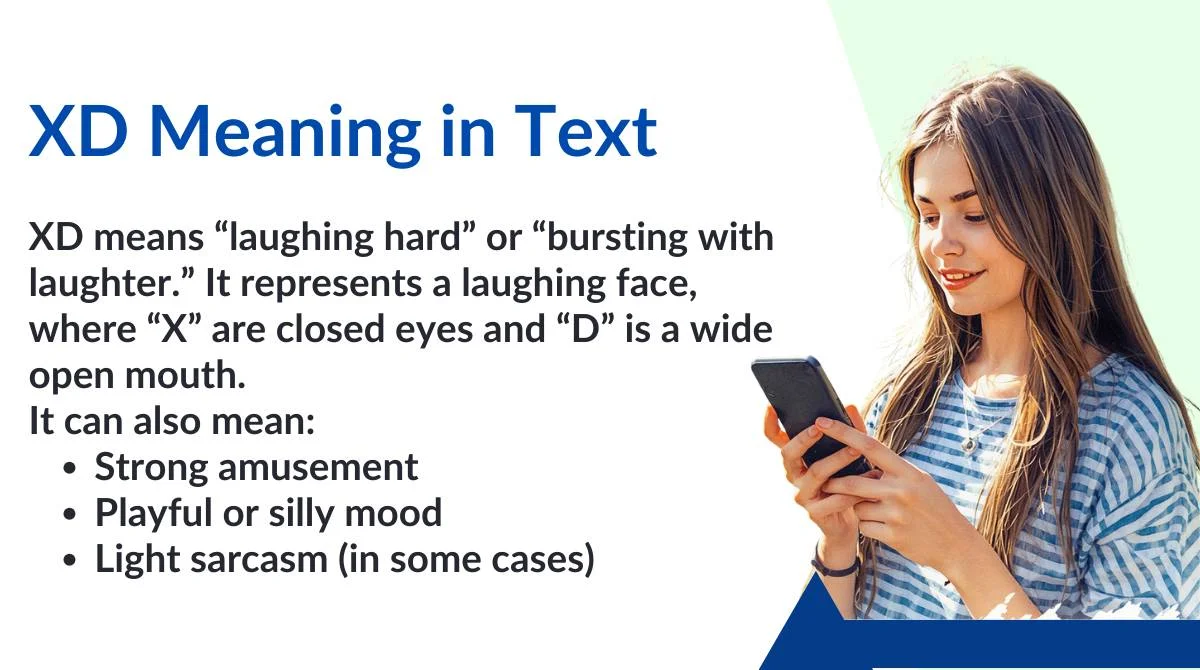
XD means “laughing hard” or “bursting with laughter.” It represents a laughing face, where “X” are closed eyes and “D” is a wide open mouth.
It can also mean:
- Strong amusement
- Playful or silly mood
- Light sarcasm (in some cases)
The Most Common Meanings of “XD”
1. Laughing Really Hard
This is the main meaning. People use XD when something is very funny.
When it applies:
- Jokes
- Memes
- Funny messages
Examples:
- “That video was unbelievable XD”
- “You really said that? XD”
2. Playful or Goofy Energy
Sometimes XD isn’t about real laughter. It shows a fun or silly vibe.
When it applies:
- Light teasing
- Friendly jokes
- Random fun chats
Examples:
- “I might eat your fries XD”
- “Oops I forgot again XD”
3. Slight Sarcasm
In some chats, XD adds a sarcastic tone. Not harsh—just playful.
When it applies:
- Friendly sarcasm
- Mild teasing
Examples:
- “Yeah, that worked perfectly… XD”
- “Great job breaking it XD”
4. Old-School Internet Humor
XD has been around for years. Some people use it for nostalgic or ironic humor.
When it applies:
- Meme culture
- Gaming chats
- Retro internet style
Examples:
- “This feels like 2010 XD”
- “Classic move XD”
How “XD” Is Used in Real Conversations
Friends & Casual Texting
This is where XD is most common. It keeps things light and fun.
Examples:
- “You’re so bad at this game XD”
- “I can’t believe you did that XD”
It shows you’re joking, not serious.
Instagram & Snapchat
People use XD in captions, replies, and DMs to react quickly.
Examples:
- “This filter is wild XD”
- “Your story was funny XD”
It works like a quick laugh reaction.
Dating Apps
Here, XD adds a relaxed, playful tone.
Examples:
- “You really like pineapple pizza? XD”
- “That’s your best joke? XD”
It can make you seem more easygoing—but don’t overuse it.
Gaming & Online Communities
XD is very common in games and forums. It shows quick reactions.
Examples:
- “That was a lucky shot XD”
- “We lost again XD”
Gamers use it fast, like a reflex.
Work or Professional Chat
Here’s where it gets tricky.
Using XD at work can feel too casual or unprofessional.
Example:
- “The file is missing XD” → Not a good look
Better to avoid it in serious conversations.
Is “XD” Rude, Flirty, or Offensive?
XD is usually not rude or offensive. It’s mostly positive.
When It Feels Positive
- Used with jokes
- Friendly teasing
- Light conversations
It shows warmth and humor.
When It Can Feel Negative
- After criticism (“You messed up XD”)
- In serious topics
- If overused
It may seem dismissive or immature.
Is It Flirty?
Sometimes, yes—but lightly.
If someone uses XD while joking with you, it can signal comfort and playful interest.
Example:
- “You’re kinda funny XD”
Not strong flirting, but a soft hint.
How to Respond When Someone Says “XD”
Casual Replies
- “Haha yeah”
- “That was funny”
- “I know right”
Funny Replies
- “You’re laughing too hard XD”
- “Calm down 😂”
- “I wasn’t even trying XD”
Neutral Replies
- “Got it”
- “Okay”
- “Makes sense”
Professional Replies
Avoid matching XD in formal chats.
Use:
- “Thanks for the update”
- “Noted”
- “Understood”
Common Misunderstandings About “XD”
1. Thinking It’s Always Serious Laughter
Sometimes XD is just habit. The person may not actually be laughing hard.
2. Confusing It With “LOL”
They are similar, but not the same.
- LOL = standard laugh
- XD = more expressive or visual laugh
3. Assuming It’s Always Positive
Tone matters. XD can feel sarcastic depending on the message.
4. Believing It’s Outdated
While older, XD is still used—especially in gaming and casual chats.
Similar Slang Terms You Should Know
- LOL – Laughing out loud
- LMAO – Stronger laughter
- ROFL – Rolling on the floor laughing
- Haha – Simple laugh
- Hehe – Soft or shy laugh
- LMFAO – Extreme laughter
- BRUH – Reaction to something silly or shocking
- OMG – Surprise or shock
- IKR – “I know, right?”
- SMH – Disappointment
- IDK – “I don’t know”
- TBH – “To be honest”
When You Should Avoid Using “XD”
Professional Settings
Emails, meetings, and formal chats are not the place for XD.
It can make you look careless.
Cross-Cultural Chats
Not everyone understands XD. Some may find it confusing.
Sensitive Situations
Avoid using XD when:
- Someone is upset
- Serious topics are discussed
- You’re giving feedback
It may seem disrespectful.
FAQs
What does XD mean from a girl?
It usually means she finds something funny or is being playful. The meaning stays the same regardless of gender.
Is XD flirting?
Not directly. It can feel flirty if used in a playful conversation, but it mainly shows humor.
Is XD still used in 2026?
Yes, but mostly in casual chats, gaming, and memes. It’s less common in formal or modern minimalist texting.
What is the difference between XD and LOL?
XD is more visual and expressive, while LOL is more standard and widely used.
Can XD be sarcastic?
Yes. In some contexts, it adds a light sarcastic tone.
Why do people use XD instead of emojis?
Some prefer text-based expressions or like the old-school internet style.
Should I use XD in professional messages?
No. It’s best to avoid it in formal or work-related communication.
Conclusion
XD may look simple, but it carries tone, emotion, and context. At its core, it means laughter—but how it feels depends on how and where it’s used.
In casual chats, it adds humor and personality. In gaming, it’s quick and natural. But in serious or professional settings, it can feel out of place.
Understanding XD meaning in text helps you read conversations better and respond the right way. Use it where it fits—and skip it where it doesn’t.