You’re texting someone, and they drop “TSS” out of nowhere. You pause. Is it slang? Is it serious? Is it a typo? This kind of confusion is exactly why so many people search for TSS meaning in text every day.
Short text slang changes fast. What made sense last year might feel totally different now. And TSS is one of those terms that depends a lot on context. It can mean something casual, emotional, or even medical if used differently.
In this guide, you’ll get a clear, simple breakdown of what TSS means, how people actually use it in chats, and how to reply without looking confused. No guesswork. Just real clarity you can use right away.
What Does “TSS” Mean in Text?
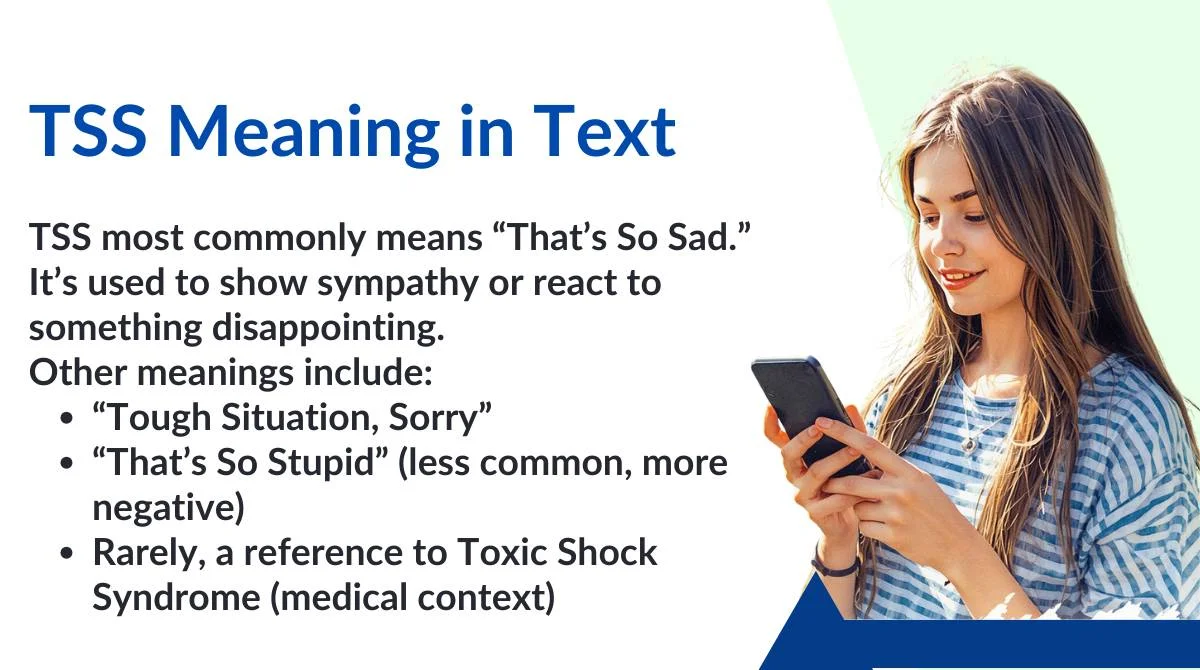
TSS most commonly means “That’s So Sad.” It’s used to show sympathy or react to something disappointing.
Other meanings include:
- “Tough Situation, Sorry”
- “That’s So foolish” (less common, more negative)
- Rarely, a reference to Toxic Shock Syndrome (medical context)
The Most Common Meanings of “TSS”
1. That’s So Sad
This is the most popular meaning. People use it when reacting to something unfortunate or emotional.
When it’s used:
- Someone shares bad news
- A story ends badly
- A sad situation comes up
Examples:
- “I missed my flight.”
“TSS, that sucks.” - “They canceled the show last minute.”
“TSS.”
2. Tough Situation, Sorry
This version feels more supportive. It shows empathy but in a short way.
When it’s used:
- Comforting someone quickly
- Showing concern without long messages
Examples:
- “I failed my test.”
“TSS, you’ll do better next time.” - “Got into an argument with my friend.”
“TSS, hope it gets fixed.”
3. That’s So Foolish
This meaning is more negative or sarcastic. It depends heavily on tone.
When it’s used:
- Reacting to something annoying
- Calling out something foolish
Examples:
- “They charged me extra for no reason.”
“TSS, that’s foolish.” - “Game crashed again.”
“TSS.”
4. Medical Meaning (Rare in Texting)
TSS can stand for Toxic Shock Syndrome, but this is mostly used in serious or health-related conversations.
Example:
- “Doctor said it could be TSS.”
This is not common in casual texting.
How “TSS” Is Used in Real Conversations
Friends & Casual Texting
Among friends, TSS is quick and emotional. It shows you care without typing too much.
Examples:
- “My crush ignored me.”
“TSS, their loss.” - “I lost my wallet.”
“TSS, that’s rough.”
It’s short but still shows support.
Instagram & Snapchat
On social media, TSS is often used in replies or comments.
Examples:
- Replying to a sad story:
“TSS omg” - Commenting on a post:
“TSS that’s actually sad”
It’s quick, reactive, and often paired with other short words.
Dating Apps
Here, tone matters more. TSS can feel caring or lazy depending on context.
Examples:
- “My day was terrible.”
“TSS, want to talk about it?” - Just replying “TSS” alone can feel low effort
Tip: Add a follow-up to sound more genuine.
Gaming & Online Communities
Gamers use TSS when reacting to bad luck or frustrating events.
Examples:
- “Got eliminated in the final round.”
“TSS bro” - “Lag ruined my match.”
“TSS”
It’s quick sympathy or shared frustration.
Work or Professional Chat
TSS is rarely used in formal work chats. It can feel too casual.
Example:
- “The meeting got canceled last minute.”
“TSS” (not ideal)
Better to use full words in professional settings.
Is “TSS” Rude, Flirty, or Offensive?
Tone Analysis
TSS is not rude by default. It’s neutral-to-supportive. But tone depends on how it’s used.
When It Feels Positive
- When someone shares something sad
- When followed by supportive words
- When used between close friends
Example:
“TSS, I’m here if you need me.”
When It Feels Negative
- When used alone with no follow-up
- When reacting to serious issues
- When used sarcastically
Example:
Someone shares something emotional → reply: “TSS”
This can feel cold or dismissive.
Flirty Use
TSS is not naturally flirty. But tone can shift it.
Example:
“TSS, you need someone to cheer you up ;)”
Now it becomes slightly playful.
How to Respond When Someone Says “TSS”
Casual Replies
- “Yeah it sucks”
- “I know right”
- “Bad day for real”
Funny Replies
- “TSS but I’ll survive”
- “Sad but still iconic”
- “TSS, I need a refund on life”
Neutral Replies
- “It’s okay”
- “I’ll manage”
- “Just one of those days”
Professional Replies
Avoid slang and respond clearly:
- “I understand, thank you”
- “Yes, it’s unfortunate”
- “Appreciate your concern”
Common Misunderstandings About “TSS”
1. Thinking It Always Means Something Serious
Not true. Most of the time, it’s just casual sympathy.
2. Confusing It With Medical Terms
Unless the topic is health, it usually doesn’t mean Toxic Shock Syndrome.
3. Assuming It’s Rude
It’s not rude unless used carelessly or sarcastically.
4. Misreading Tone
“TSS” can feel supportive or dismissive depending on context and relationship.
Similar Slang Terms You Should Know
- SMH – Shaking my head (disappointment)
- FR – For real (agreement)
- OMG – Oh my God (reaction)
- LOL – Laughing out loud
- TBH – To be honest
- NGL – Not gonna lie
- BRB – Be right back
- IDK – I don’t know
- IKR – I know right
- SUS – Suspicious
- FOMO – Fear of missing out
- ICYMI – In case you missed it
These often appear alongside TSS in chats.
When You Should Avoid Using “TSS”
Professional Settings
Emails, meetings, or formal chats should avoid slang.
Cross-Cultural Chats
Not everyone understands internet slang. It may confuse others.
Sensitive Situations
Serious topics need more thoughtful responses.
Instead of:
“TSS”
Say:
“I’m really sorry to hear that.”
When You Need to Show Real Support
Short replies can feel weak. Use full sentences.
FAQs
What does TSS mean in texting?
It usually means “That’s So Sad,” used to show sympathy.
Is TSS a bad word?
No, it’s not offensive. It depends on how you use it.
Can TSS be sarcastic?
Yes, in some cases it can sound sarcastic or dismissive.
Is TSS used by Gen Z?
Yes, it’s common in casual texting and social media.
What’s the difference between TSS and SMH?
TSS shows sympathy, while SMH shows disappointment or disbelief.
Should I use TSS in professional messages?
No, it’s better to use clear, formal language.
Does TSS always mean “That’s So Sad”?
No, but that’s the most common meaning in texting.
Conclusion
TSS is a short, simple texting slang that mostly means “That’s So Sad.” It’s quick, emotional, and widely used in casual chats. But like most slang, its meaning depends on context.
Use it with friends, in light conversations, and when a short response fits. Avoid it in serious or professional situations where tone matters more.
Now when you see “TSS,” you won’t be confused. You’ll know exactly what it means—and how to reply the right way.