You’re texting someone, everything is going fine, and suddenly they reply: “AFK.” Then… silence. No follow-up. No explanation. You’re left wondering—did they leave? Are they ignoring you? Is this rude?
This exact moment is why so many people search for AFK meaning in text. It shows up everywhere—gaming chats, Snapchat, DMs, even work messages—and not everyone uses it the same way.
The problem? Slang moves fast, and context changes everything. One “AFK” can mean something totally normal, while another might feel cold or dismissive.
In this guide, you’ll get a clear, simple explanation of what AFK really means, how people use it in 2026, and how to respond without overthinking. No confusion. No guessing.
What Does “AFK” Mean in Text?
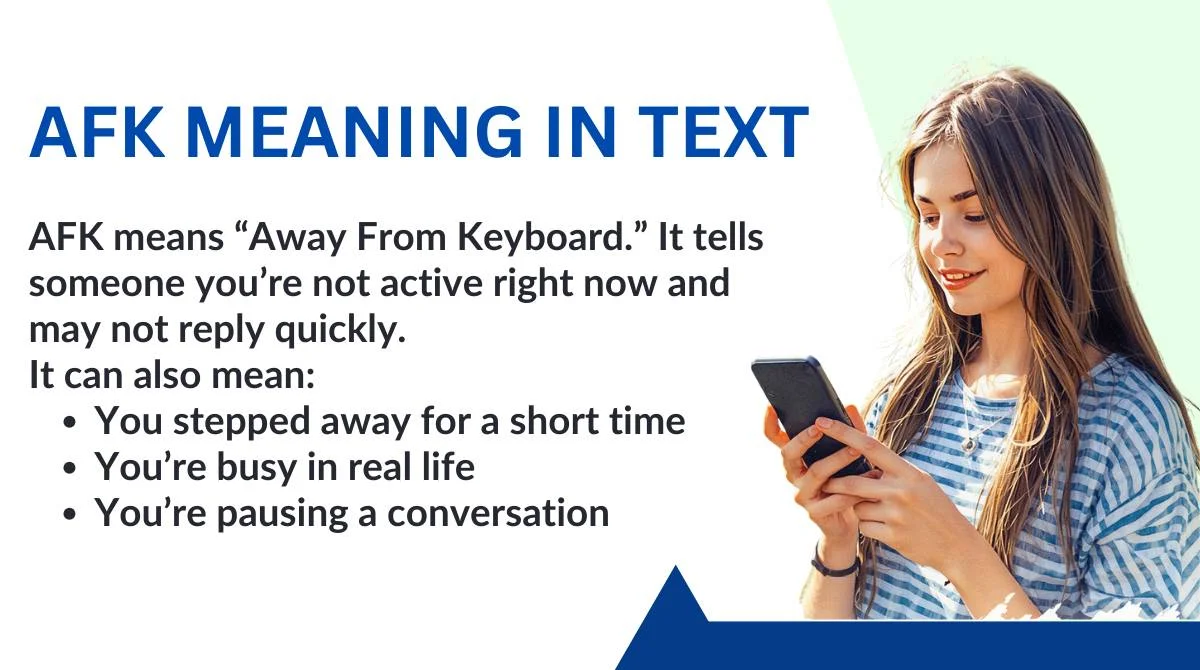
AFK means “Away From Keyboard.” It tells someone you’re not active right now and may not reply quickly.
It can also mean:
- You stepped away for a short time
- You’re busy in real life
- You’re pausing a conversation
The Most Common Meanings of “AFK”
1. Literally Away From Device
This is the original meaning. The person is not at their phone, laptop, or game.
When it’s used:
- Gaming
- Long chats
- Group calls
Example:
“I’ll be AFK for 10 mins, food is here.”
2. Temporarily Busy
Sometimes they’re still around, just not fully focused.
When it’s used:
- Multitasking
- During classes or work
- While doing chores
Example:
“AFK rn, teacher is watching.”
3. Ending the Conversation (Soft Exit)
Some people use AFK as a polite way to leave a chat.
When it’s used:
- They’re done talking
- They don’t want to explain
- Conversation feels dry
Example:
“Gotta go AFK, talk later.”
4. Avoiding Immediate Reply
Not always intentional, but AFK can delay responses without sounding rude.
When it’s used:
- They don’t know what to say
- They need time
- They’re overwhelmed
Example:
“AFK for a bit, I’ll reply later.”
How “AFK” Is Used in Real Conversations
Friends & Casual Texting
Among friends, AFK is normal and relaxed. No one reads too much into it.
Examples:
“AFK, mom called me.”
“Wait AFK, brb.”
It usually means they’ll come back.
Instagram & Snapchat
Here, AFK can feel more casual but also less clear.
Examples:
“AFK, phone dying.”
“AFK, ttyl.”
Sometimes they return. Sometimes they don’t. It depends on the vibe.
Dating Apps
This is where AFK gets tricky.
Examples:
“Sorry AFK earlier.”
“Going AFK, talk soon.”
If they come back later, it’s fine.
If they disappear after saying AFK, it can feel like soft ghosting.
Gaming & Online Communities
This is AFK’s natural home. It’s direct and expected.
Examples:
“AFK 2 mins.”
“Don’t start, I’m AFK.”
No one takes it personally here.
Work or Professional Chat
AFK is used less, but still appears in informal work chats.
Examples:
“AFK for lunch.”
“Stepping AFK for a meeting.”
In formal settings, people prefer clearer phrases like “away” or “in a meeting.”
Is “AFK” Rude, Flirty, or Offensive?
AFK itself is neutral. The tone depends on timing and context.
When It Feels Positive
- They explain why they’re leaving
- They return later
- Conversation is already casual
Example:
“AFK for dinner, talk later!”
Feels normal and respectful.
When It Feels Rude
- They drop “AFK” mid-conversation
- No explanation
- They don’t come back
Example:
“AFK.” (and disappear)
This can feel dismissive.
When It Feels Flirty
Rare, but possible.
If someone says:
“AFK but thinking about you”
That adds a playful or soft tone.
Context Psychology
People judge tone based on:
- How close you are
- How long they’re gone
- If they return
AFK isn’t the problem—the behavior after it is.
How to Respond When Someone Says “AFK”
Casual Replies
- “Okay, np”
- “Cool, see you later”
- “Alright”
Funny Replies
- “Don’t get lost”
- “Come back alive”
- “AFK but not forever pls”
Neutral Replies
- “Got it”
- “Message me when back”
- “No rush”
Professional Replies
- “Thanks for letting me know”
- “We’ll continue later”
- “Please update when available”
Common Misunderstandings About “AFK”
1. It Always Means They’re Gone
Not true. They might still be around, just busy.
2. It’s the Same as Ghosting
AFK is temporary. Ghosting is permanent silence.
3. It’s Always Polite
Not always. A one-word “AFK” can feel cold.
4. It Means They Don’t Care
Sometimes it just means real life got in the way.
5. It’s Only for Gamers
It started in gaming, but now it’s used everywhere.
Similar Slang Terms You Should Know
- BRB – Be right back
- TTYL – Talk to you later
- GTG – Got to go
- IDK – I don’t know
- IMO – In my opinion
- FYI – For your information
- LMK – Let me know
- TBH – To be honest
- BTW – By the way
- NP – No problem
These often appear alongside AFK in conversations.
When You Should Avoid Using “AFK”
Professional Settings
In formal emails or meetings, AFK sounds too casual.
Better options:
“I’ll be unavailable”
“I’m stepping away briefly”
Cross-Cultural Chats
Not everyone understands internet slang.
Using AFK may confuse people.
Sensitive Situations
If someone is sharing something serious, replying “AFK” can feel dismissive.
Better to respond with care first.
FAQs
What does AFK mean in texting?
AFK means “Away From Keyboard,” showing the person is not active right now.
Does AFK mean someone is ignoring me?
Not always. It usually means they’re busy or away temporarily.
Is AFK rude to send?
It depends. With context, it’s fine. Without explanation, it can feel abrupt.
Do people still use AFK in 2026?
Yes, especially in gaming, casual chats, and quick messages.
What’s the difference between AFK and BRB?
AFK means away in general. BRB suggests a quick return.
Can AFK be used in work chats?
Only in informal settings. In formal communication, avoid it.
Why do gamers use AFK so much?
Because it quickly tells others they’re not active without typing long messages.
Conclusion
AFK is one of those simple internet terms that carries more meaning than it looks. At its core, it just means stepping away—but how it feels depends on context, tone, and timing.
In casual chats, it’s normal. In gaming, it’s expected. In dating or work, it can be misunderstood if used without care.
The key is simple:
If you use AFK, give a little context when needed.
If someone sends it, don’t overthink it right away.
Most of the time, it’s not deep—it’s just life happening off-screen.