You’re texting someone, scrolling through chats, and suddenly you see “TS.” Now you pause. What does it mean? Is it rude? Is it slang? Is it something serious?
That small two-letter text can feel confusing because it shows up in different ways across chats, social media, and even gaming. That’s exactly why so many people search for “TS meaning in text”—they want a clear, simple answer without guessing wrong.
The truth is, “TS” doesn’t have just one meaning. It changes based on context, tone, and where it’s used. In this guide, you’ll get straight answers, real examples, and zero confusion. By the end, you’ll know exactly what “TS” means—and how to reply without overthinking.
What Does “TS Meaning in Text” Mean in Text?
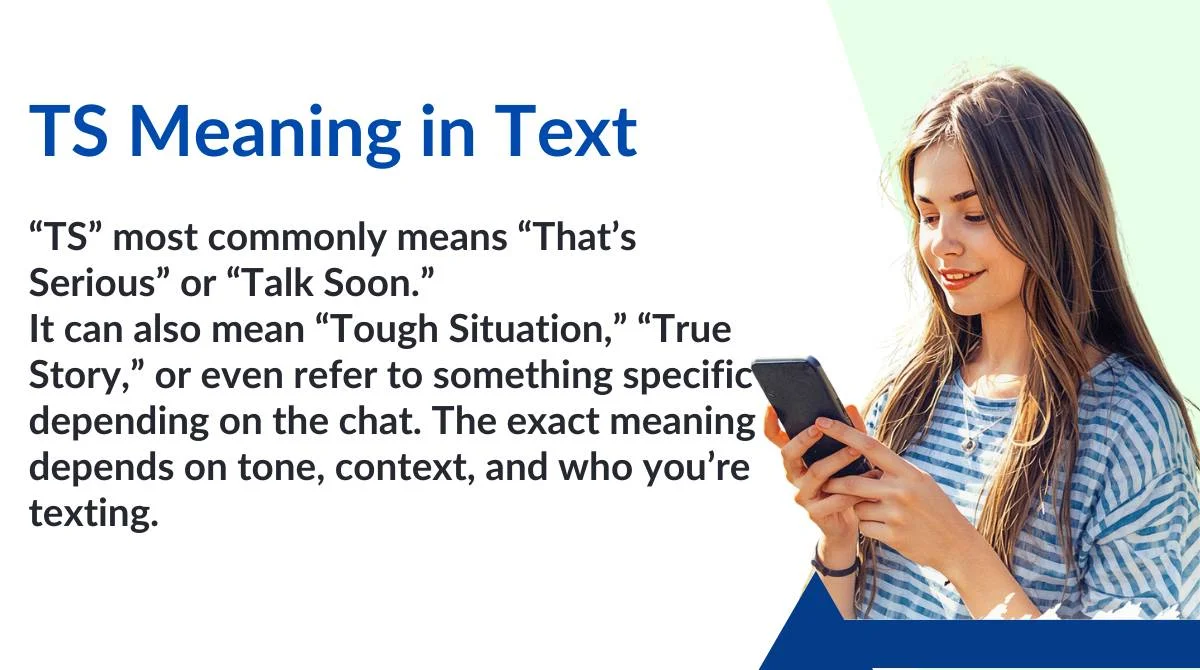
“TS” most commonly means “That’s Serious” or “Talk Soon.”
It can also mean “Tough Situation,” “True Story,” or even refer to something specific depending on the chat. The exact meaning depends on tone, context, and who you’re texting.
The Most Common Meanings of “TS”
1. That’s Serious
This is one of the most popular meanings.
People use “TS” when reacting to something important or intense.
Example:
- “He got into an accident.”
- “TS… hope he’s okay.”
Use this when something feels heavy or real.
2. Talk Soon
Used when ending a conversation casually.
Example:
- “I gotta go now, TS.”
It’s short, quick, and friendly.
3. Tough Situation
Used when someone is going through something hard.
Example:
- “Lost my job today.”
- “TS, man. Stay strong.”
It shows empathy without long messages.
4. True Story
Sometimes used to confirm something real or relatable.
Example:
- “I once forgot my own birthday.”
- “TS.”
It means “that really happened.”
5. Personal or Niche Meanings
In some cases, “TS” can mean something specific to a group.
Examples:
- Inside jokes
- Gaming slang
- Fandom references
Always check context before assuming.
How “TS” Is Used in Real Conversations
Friends & Casual Texting
Among friends, “TS” is relaxed and quick.
Examples:
- “That exam was unbelievable.”
- “TS bro.”
Or:
- “I’ll call later, TS.”
It keeps chats short and natural.
Instagram & Snapchat
On social media, “TS” often shows reaction or emotion.
Examples:
- “She really did that?? TS.”
- “TS, that’s wild.”
It’s used like a quick comment.
Dating Apps
Here, tone matters more.
“TS” can mean:
- “Talk soon” (positive ending)
- “That’s serious” (reacting to something)
Example:
- “I had a rough week.”
- “TS… want to talk about it?”
It shows interest if used right.
Gaming & Online Communities
In gaming chats, “TS” can mean:
- Tough situation
- Team-related shorthand (rare cases)
Example:
- “We lost that round bad.”
- “TS, next match.”
Quick and efficient communication matters here.
Work or Professional Chat
This is where “TS” gets risky.
Most professionals don’t use it because it’s unclear.
If used, it usually means:
- “Talk soon”
Example:
- “Let’s continue tomorrow, TS.”
Still, it’s better to avoid slang at work.
Is “TS” Rude, Flirty, or Offensive?
“TS” is not rude by default—but tone changes everything.
When It Feels Positive
- Supportive replies
- Friendly sign-offs
- Casual chats
Example:
“TS, hope things get better.”
Feels kind and understanding.
When It Feels Neutral
- Quick responses
- No strong emotion
Example:
“TS.”
Can feel plain or emotionless.
When It Feels Negative
- Short replies during serious talk
- Lack of empathy
Example:
“I’m really upset.”
“TS.”
This can feel cold or dismissive.
Flirty Use?
Rare, but possible.
If someone says:
“Gotta go, TS ;)”
It can feel slightly playful.
How to Respond When Someone Says “TS”
Casual Replies
- “Yeah, it really is.”
- “I know right.”
- “For real.”
Funny Replies
- “TS? You mean super serious?”
- “TS level 100.”
- “Certified TS moment.”
Neutral Replies
- “Okay.”
- “Got it.”
- “Makes sense.”
Professional Replies
- “Talk soon.”
- “Looking forward to it.”
- “We’ll connect later.”
Common Misunderstandings About “TS”
1. Thinking It Has Only One Meaning
Many assume “TS” means just one thing. It doesn’t.
Context changes everything.
2. Confusing It With Other Slang
“TS” can be mixed up with:
- “TMI”
- “TBH”
- “SMH”
Each has a totally different meaning.
3. Assuming It’s Rude
Short replies can feel rude—but “TS” isn’t always negative.
It depends on tone and situation.
4. Misreading Tone
Text has no voice or facial expression.
“TS” can sound caring or cold depending on the message before it.
Similar Slang Terms You Should Know
- TBH – To be honest
- SMH – Shaking my head
- IMO – In my opinion
- IDK – I don’t know
- FR – For real
- NGL – Not gonna lie
- BRB – Be right back
- TTYL – Talk to you later
- ICYMI – In case you missed it
- LMK – Let me know
These often appear in the same chats as “TS.”
When You Should Avoid Using “TS”
Professional Settings
It can confuse coworkers or clients.
Use full phrases instead.
Cross-Cultural Chats
Not everyone understands slang.
Keep it simple to avoid confusion.
Sensitive Situations
When someone shares something serious, short replies like “TS” may feel cold.
Better to write a full, supportive message.
Formal Conversations
Emails, reports, or official chats should avoid slang.
Clarity matters more than speed.
FAQs
What does TS mean in texting?
It usually means “That’s Serious” or “Talk Soon,” depending on context.
Is TS rude in text messages?
No, but it can feel rude if used in serious conversations without emotion.
What does TS mean on Snapchat or Instagram?
It often means “That’s Serious” as a reaction to posts or messages.
Can TS mean something different in gaming?
Yes, it can mean “Tough Situation” or have game-specific meanings.
Is TS the same as TTYL?
Not exactly. “TS” can mean “Talk Soon,” while “TTYL” means “Talk To You Later.”
How do I reply to TS?
Reply based on context—casual, supportive, or professional.
Should I use TS in work chats?
It’s better to avoid it and use clear, full words.
Conclusion
“TS” may look simple, but its meaning changes fast depending on context. Most of the time, it means “That’s Serious” or “Talk Soon.” The key is reading the conversation around it.
In casual chats, it’s quick and useful. On social media, it shows reaction. But in serious or professional situations, it can feel unclear or even cold.
If you remember one thing: always match the tone. When in doubt, use full words instead of slang. That way, you avoid confusion and keep your message clear.
Now, next time you see “TS,” you won’t have to guess—you’ll already know exactly what it means.